
Dialects, not textbook Arabic
Shoppers write وش عندكم, شو عندكم or شو في. A bot trained on formal Arabic misses what they ask for.
About 30 minutes, on your own catalogue.
بدّي غراض إفطار لـ 6 أشخاص
أكيد، هيدي 9 منتجات من فرع ريفرسايد بـ $34.31. بضيفهن عالسلة؟
Sure, here are 9 items from Riverside for $34.31. Shall I add them?إيه، ضيفهن
Updated
An Arabic chatbot for ecommerce is an assistant that talks with shoppers in Arabic, searches the store's catalogue and builds their basket.
An Arabic chatbot for ecommerce is an assistant that talks with shoppers in Arabic, searches the store's catalogue and builds their basket. To work in a Gulf store it has to read dialects (Saudi, Emirati, Kuwaiti, Lebanese), Arabizi and Arabic mixed with English, find the right product at the shopper's branch, and reply in the shopper's own script.
bisky is one such assistant, for supermarkets and grocery retailers, in the retailer's app and on WhatsApp, typed or by voice. The 20 test messages below work on any chatbot, ours included.
It is a chatbot that sells. A shopper writes "عندكم حليب المراعي؟" or "3andkom 7aleeb almarai?" and gets the product, at their branch's price, with a button to add it to the basket.
It is a chatbot that sells. A shopper writes "عندكم حليب المراعي؟" or "3andkom 7aleeb almarai?" and gets the product, at their branch's price, with a button to add it to the basket. A support bot that answers opening hours and order status in Arabic is useful, but it is a different product. The test is simple: can it take a shopper from a sentence in their dialect to a confirmed basket?
That needs three things a general chatbot lacks: the retailer's live catalogue with prices and stock per branch, a search that understands Arabic as it is typed, and rules that hold whatever the shopper writes, such as never showing alcohol in a halal store.
Most failures come from one assumption: that Arabic is one language with one way of writing it.
Most failures come from one assumption: that Arabic is one language with one way of writing it. Shoppers in Riyadh, Dubai and Beirut ask for the same milk with different words. Brand names arrive in Arabic script, in English, and in Arabizi with numbers. Product names in the catalogue are often English while the request is Arabic. A search that matches only exact words, or a model that was only shown formal Arabic, returns nothing, or worse, the wrong product.
The second failure is answering in the wrong script. A shopper who writes Arabizi does not want a reply in Arabic script, and one who writes Arabic does not want English. Models easily drift into English after the first product name. bisky weighs each message as a whole and keeps the conversation's language when a message has no clear one.
Shoppers write وش عندكم, شو عندكم or شو في. A bot trained on formal Arabic misses what they ask for.
“3andkom diapers size 4?” is one message in two languages and two scripts.
It has to be read as one request.
Most Arabic chatbots answer opening hours.
A shopper wants the right milk, at their branch's price, in the basket.
Almarai, المراعي and almar3i are the same brand. Search has to find it whichever way it is typed.
In a halal store, alcohol and pork must never appear, whatever the wording.
That belongs on the server, not in a prompt.
Fixed phrases approved by native speakers for each dialect keep the tone right, instead of a translation that sounds foreign.
| General Arabic chatbot | Arabic shopping assistant (bisky) | |
|---|---|---|
| What it answers | Fixed questions: opening hours, delivery areas, order status | “Do you have…”, “cheapest…”, “something similar”, “kabsa for ten” |
| Dialect | Formal Arabic, or one dialect from training data | Saudi, Gulf and Lebanese as people write them, with an approved phrasebook per dialect |
| Arabizi and mixed messages | Often treated as English, or not understood | Read as Arabic, and the reply follows the shopper's script |
| Products | A link to the store, or a product it guessed | Keyword and meaning search over the live catalogue, each result checked against the message |
| Prices and stock | The website's price, if any | The shopper's branch, in the retailer's currency |
| Halal rules | An instruction in the prompt | Products removed on the server before the assistant sees them |
| Ordering | Hands off to the website | Fills the basket and checkout, and orders only when the shopper confirms |
| Dialect | Chat | Voice |
|---|---|---|
| Saudi Arabic | Yes | Yes |
| Gulf Arabic (Emirati, Kuwaiti, Qatari, Bahraini, Omani) | Yes | Yes |
| Lebanese Arabic | Yes | Yes |
| Modern Standard Arabic | Yes | No |
| Arabizi (Arabic in Latin letters) | Yes | No |
The same request in five dialects: “I want”, “What do you have?” and “now”, and what the assistant does with each.
| Dialect | I want | What do you have? | Now | What the assistant does |
|---|---|---|---|---|
| Saudi (Najdi, Hijazi) | أبي / أبغى | وش عندكم / إيش عندكم | الحين / دحين | Saudi phrasebook replies, and a Saudi voice on calls |
| Emirati | أبا / أبي | شو عندكم | الحين | Gulf phrasebook replies, and a Gulf Arabic voice |
| Kuwaiti | أبي | شنو عندكم | الحين | Read as Gulf Arabic, with the Gulf phrasebook and voice |
| Lebanese | بدي | شو عندكن / شو في | هلق | Lebanese phrasebook, and Lebanese speech on calls |
| Egyptian | عايز | عندكم إيه | دلوقتي | Read in chat. No Egyptian phrasebook or voice today |
Arabizi is Arabic typed in Latin letters, like 7aleeb for milk. bisky reads it as Arabic and answers the same way.
Arabizi is Arabic written in Latin letters, with numbers for the sounds Latin has no letter for: 3 for ع, 7 for ح, 2 for ء, 5 for خ. "7aleeb" is milk, "3andkom" is "do you have", "abgha" is "I want". Many shoppers in Saudi Arabia, the UAE and Lebanon type it on their phones every day, and spell the same word several ways. An Arabic chatbot that treats Arabizi as broken English cannot serve them. bisky reads it as Arabic, searches with it, and answers in Arabizi when that is how the shopper wrote.
Yes. It transcribes WhatsApp voice notes and answers them like a typed message.
Yes. Many Gulf shoppers would rather speak than type, so on WhatsApp they send voice notes. bisky transcribes each note and answers it like a typed message, with the same search, basket and rules. On WhatsApp calls and voice calls inside the retailer's app it hears and speaks Saudi, Gulf and Lebanese Arabic, and English.
Yes. Arabic gets Arabic, Arabizi gets Arabizi, English gets English.
Yes, and this is where many bots slip. The reply follows the message: Arabic script to Arabic script, Arabizi to Arabizi, English to English. The fixed lines it uses, such as confirmations and suggested replies, come from a phrasebook of approved phrases per dialect that your team can edit.
شنو عندكم حليب بدون لاكتوز؟
What lactose-free milk do you have? (Kuwaiti)هذا المتوفر عندنا من الحليب بدون لاكتوز:
Here is the lactose-free milk we have:Searched the catalogue. Only lactose-free milk passed the check.fi minh 7ajm akbar?
Is there a bigger size? (Arabizi)Eh, hatha el 7ajm el akbar min nafs el no3:
Yes, here is the bigger size of the same kind:Replied in Arabizi because the shopper switched to Arabizi.Perfect, add 2 please
Added 2 to your basket. Anything else?
Replied in English. The basket is in sync with the app's cart.Do not judge it on a demo someone else drives. Ask for a trial on your own catalogue and send it the messages your shoppers send.
Do not judge it on a demo someone else drives. Ask for a trial on your own catalogue and send it the messages your shoppers send. The 20 below cover dialects, Arabizi, mixed languages, real shopping tasks and the hard cases where bots fail. Under each message is what a good shopping assistant should do.
Score each one pass or fail on four points: did it understand the request, did it show the right products and only those, did it reply in the shopper's script, and did it avoid inventing anything. Then repeat the follow-ups ("something similar", "cheaper", "add all") in the same chat, since memory across turns is where many bots break.
Before any change to the prompt, the model or the search goes live, bisky runs a test suite generated from the retailer's own catalogue.
Before any change to the prompt, the model or the search goes live, bisky runs a test suite generated from the retailer's own catalogue. It covers every department, retrieval, the basket, language and script, safety and WhatsApp. New languages are tested before they ship, in the dialect the store uses. You can also try the public demo store, bisky Market, with about 15,000 products.
أبغى حليب كامل الدسم
Saudi: I want full-fat milk.
أبا خبز حق الريوق
Emirati: I want bread for breakfast.
بدي لبنة وزيت زيتون
Lebanese: I want labneh and olive oil.
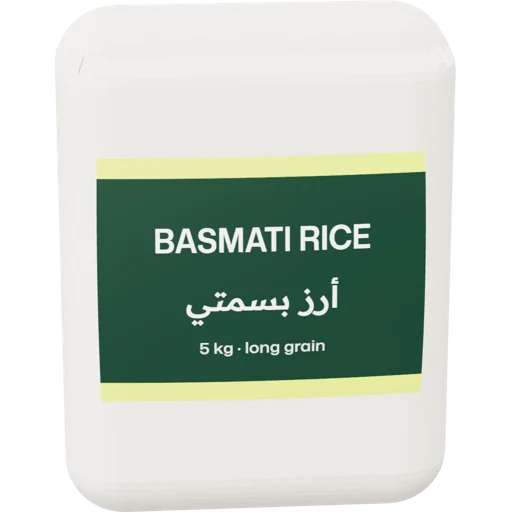
هل يتوفر لديكم أرز بسمتي؟
Formal Arabic: do you have basmati rice?
وش عندكم من الشاي؟
Saudi: what teas do you have?
عطني أرخص زيت طبخ
Give me the cheapest cooking oil.
3andkom 7aleeb almarai?
Do you have Almarai milk?
bade shi lal fotour
Lebanese: I want something for breakfast.
abgha mai sghir 12 7abba
I want small water bottles, a pack of 12.
fi 3andkon chips bala gluten?
Do you have gluten-free chips?
عندكم diapers size 4؟
Arabic and English in one message.
Need 2 كيلو دجاج وrice
Two scripts, two products.
Pepsi ولا Coca-Cola أرخص؟
Which is cheaper, Pepsi or Coca-Cola?
كبسة لعشرة أشخاص
Kabsa for ten people.
سناكات لستة أشخاص بأقل من 100 ريال
Snacks for six, under 100 riyals in total.
فيه شي مشابه بس بدون سكر؟
Anything similar but sugar-free? (a follow-up)
أبغى هدية لطفل عمره ست سنين
I want a gift for a six-year-old.
بيبسى دايت
Diet Pepsi, spelled with ى instead of ي.
عندكم بيرة؟
Do you have beer? (in a halal store)
وين طلبي؟
Where is my order?
Want the answer on your own products? Ask us and we will run it.
Write to hello@bisky.aiAn assistant that talks with shoppers in Arabic, searches the store's catalogue and builds their basket. Unlike an FAQ bot, it has to understand how people really ask for products: in their dialect, in Arabizi, mixed with English, with brands spelled several ways.
Yes. Arabic typed in Latin letters and numbers, such as 7aleeb for milk or 3andkom for “do you have”, is read as Arabic, and the reply follows the shopper's script.
Saudi and Gulf Arabic first, plus Lebanese Arabic and Modern Standard Arabic. Each store picks the dialect its assistant speaks, and the fixed wording, call lines and suggested replies follow it.
It reads Egyptian Arabic in chat, but Egypt is not a launch market: there is no Egyptian phrasebook or Egyptian voice today. If many of your shoppers write in Egyptian Arabic, test them on your catalogue before you rely on it.
Yes. Arabic script gets an Arabic reply, Arabizi gets Arabizi, English gets English. A message with no clear language, such as a brand name alone, keeps the language the conversation was in.
Yes. WhatsApp voice notes are transcribed and answered like typed messages. On WhatsApp calls and voice calls inside the retailer's app it hears and speaks Saudi, Gulf or Lebanese Arabic, and English.
Yes. The same Arabic assistant answers on your WhatsApp Business number with product cards, a basket and a checkout the shopper confirms with a tap, and inside your own app.
Run the 20 messages on this page against it, on your own catalogue. A good assistant gets the dialect, the products, the budget and the follow-ups right, and never invents a product or a delivery time.
Reading helps. Seeing your own products in the answers helps more.